
Damaged hair can be difficult to manage. Frequent colouring, chemical treatments, heat styling, pollution, sun exposure, hard water, and improper hair care can leave hair dry, weak, rough, frizzy, and prone to breakage.
One professional hair-care option that many people consider for damaged hair is a protein treatment. Hair is primarily made up of a protein called keratin, and professional protein treatments are designed to condition the hair and temporarily improve its strength, smoothness, and manageability.
But what exactly does a protein treatment do? And is it suitable for every type of damaged hair?
In this blog, we explore the top 10 protein treatment benefits for damaged hair, how protein treatments work, who may benefit from them, and how to maintain your results.
What Is a Protein Treatment for Hair?
A protein treatment is a hair-care treatment formulated with proteins or protein-derived ingredients. Depending on the product, these may include ingredients such as hydrolyzed keratin, wheat protein, silk protein, collagen-derived ingredients, or other conditioning proteins.
Because the proteins are typically hydrolyzed into smaller components, they can interact with the hair surface and help improve the feel and appearance of damaged or porous hair.
A professional protein treatment for damaged hair may be particularly useful when hair has been exposed to repeated chemical processing or heat styling.
However, protein treatments are not permanent repairs. They primarily provide conditioning and cosmetic benefits, and the results can vary depending on the condition and type of hair.
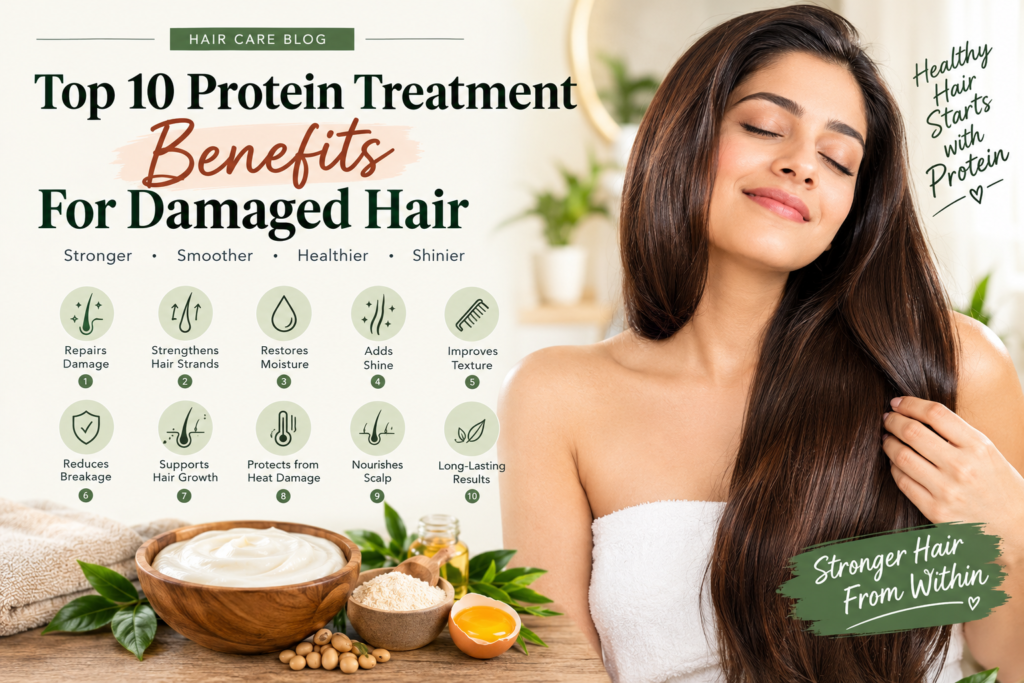
Top 10 Protein Treatment Benefits For Damaged Hair
1. Helps Strengthen the Feel of Weak Hair
One of the main reasons people choose a protein treatment is to improve the feel of weak or fragile hair.
Repeated chemical processing, bleaching, colouring, and heat styling can affect the hair’s structure. Hair may then feel weaker and become more susceptible to breakage.
Protein-based conditioning treatments can temporarily improve the strength and resilience of the hair fibre.
This makes protein treatment for damaged hair an option worth discussing with a professional stylist if your hair feels weak or fragile.
2. Helps Reduce Hair Breakage
Hair breakage can occur when strands become dry, brittle, or damaged.
A suitable protein treatment can help condition the hair and improve its surface properties. This may make the hair feel stronger and less prone to snapping during everyday handling.
However, a protein treatment cannot completely reverse severe structural damage. If the ends are extremely split or damaged, trimming may still be necessary.
For best results, combine professional treatments with gentle brushing, reduced heat exposure, and suitable home-care products.
3. Improves the Appearance of Damaged Hair
Damaged hair can look dull, rough, and uneven.
Protein treatments can help improve the cosmetic appearance of the hair by providing conditioning and smoothing effects. After treatment, hair may appear more polished and healthier-looking.
This can be particularly noticeable on hair that has been frequently coloured, bleached, straightened, or heat styled.
The result is usually temporary and depends on the product, hair condition, and maintenance routine.
4. Helps Improve Hair Texture
Rough texture is a common concern with damaged hair.
When the hair surface becomes uneven, strands can feel coarse and difficult to manage. A protein treatment can provide conditioning that makes the hair feel smoother and softer.
Improved texture can make everyday activities such as brushing, combing, and styling easier.
If your hair feels rough after colouring or other chemical services, ask your hairstylist whether a protein-based treatment is appropriate.
5. Helps Manage Frizz
Frizz can become more noticeable when the hair is dry, porous, or damaged.
Protein-based conditioning treatments may help smooth the hair surface and improve manageability. As a result, hair may appear less frizzy after treatment.
However, frizz can also be affected by humidity, hair type, moisture balance, and styling habits.
For longer-lasting frizz management, combine professional treatments with an appropriate shampoo, conditioner, leave-in product, and heat protectant.
6. Helps Improve Hair Elasticity and Manageability
Healthy hair needs an appropriate balance of strength and flexibility.
Overprocessed hair can sometimes feel overly stretchy when wet or become brittle when dry. Professional treatments may help improve the feel and manageability of such hair, depending on the type and extent of damage.
Protein treatments can be especially useful as part of a broader maintenance routine for hair exposed to frequent chemical processing.
Your stylist can help determine whether your hair needs protein, moisture, or a combination of conditioning approaches.
7. Helps Maintain Chemically Treated Hair
Colouring, bleaching, smoothening, straightening, and other chemical services can affect hair condition.
If you regularly undergo chemical services, maintaining the quality of your hair between appointments becomes important.
A suitable protein treatment for chemically treated hair can provide additional conditioning and help maintain a smoother, healthier-looking appearance.
Always tell your stylist about previous chemical treatments before starting a protein treatment. Some treatments may not be compatible with every chemical service.
8. Helps Improve Shine
Healthy-looking hair often reflects light more evenly, creating a shinier appearance.
Damaged and rough hair may appear dull because its surface is less smooth.
Protein treatments can provide conditioning and smoothing effects that may improve the appearance of shine.
For best results, combine professional treatment with regular conditioning and avoid excessive heat styling.
9. Makes Hair Easier to Comb and Style
Damaged hair can become tangled easily.
When strands feel rough and dry, brushing can cause additional mechanical stress and breakage.
A conditioning protein treatment may improve smoothness and reduce the feeling of tangling, making hair easier to comb and style.
Use a wide-tooth comb and avoid aggressive brushing, particularly when hair is wet.
Small changes in your daily routine can make a significant difference in protecting damaged hair.
10. Provides Professional Care for Severely Stressed Hair
One advantage of getting a protein treatment at a professional salon is that the stylist can assess your hair before recommending a service.
Professional assessment can consider:
- Hair texture
- Hair porosity
- Chemical history
- Colouring or bleaching
- Heat-styling habits
- Breakage
- Dryness
- Current hair condition
Based on these factors, your stylist can recommend an appropriate treatment and maintenance routine.
This personalised approach is particularly useful when your hair has undergone multiple chemical or heat treatments.
Protein Treatment vs. Moisture Treatment
Not all damaged hair needs more protein.
Hair also needs appropriate conditioning and moisture. Using too much protein without considering the hair’s overall condition may leave some hair feeling stiff, dry, or less flexible.
A protein treatment generally focuses on strengthening and conditioning the feel of damaged hair, while moisture-focused treatments primarily aim to improve softness, hydration, and flexibility.
The right choice depends on your hair.
If you are unsure whether your hair needs protein or moisture, consult a professional hairstylist instead of repeatedly using intensive treatments at home.
Who Can Benefit From a Protein Treatment?
A protein treatment may be worth considering if your hair is:
- Chemically treated
- Frequently coloured
- Bleached
- Heat damaged
- Weak or fragile
- Prone to breakage
- Rough or difficult to manage
- Frizzy and porous
- Frequently exposed to styling
However, every person’s hair is different.
If you have an active scalp condition, severe hair loss, unexplained breakage, or another persistent concern, consider consulting a dermatologist or qualified healthcare professional.
How Often Should You Get a Protein Treatment?
There is no universal schedule for protein treatments.
The ideal frequency depends on your hair’s condition, the type of treatment used, and your home-care routine.
Some professional protein treatments are designed for occasional use, while others may be suitable for more frequent maintenance.
Avoid overusing protein treatments. Too much protein can make some hair feel stiff or dry.
Your hairstylist can recommend an appropriate treatment frequency after assessing your hair.
How to Maintain Protein Treatment Results
A good home-care routine can help maintain the cosmetic benefits of a professional protein treatment.
1. Use a Suitable Shampoo
Choose a shampoo appropriate for your scalp and hair type. If your hair is chemically treated, ask your stylist about treatment-compatible products.
2. Condition Your Hair Regularly
Use conditioner after shampooing to maintain softness and manageability.
3. Limit Excessive Heat
Frequent high-temperature styling can contribute to further damage. Use a heat protectant whenever heat styling is necessary.
4. Handle Wet Hair Gently
Wet hair is more vulnerable to mechanical stress. Avoid aggressive towel drying and harsh brushing.
5. Trim Severely Damaged Ends
If your ends are severely split or damaged, a trim may be necessary. Hair-care treatments can improve appearance and manageability but cannot permanently rejoin split ends.
Why Choose a Professional Protein Treatment?
A professional salon treatment allows a stylist to evaluate your hair before selecting a product.
This is important because damaged hair does not always have the same needs.
A professional can consider your previous colour, bleaching, straightening, smoothening, heat exposure, and current hair condition.
At a salon, the treatment can also be applied systematically and followed by appropriate conditioning and finishing.
For people with highly processed hair, professional guidance can help avoid unnecessary or excessive treatments.
Final Thoughts
Damaged hair requires consistent care, not just a single treatment.
A professional protein treatment for damaged hair can help improve the appearance, texture, smoothness, manageability, and conditioned feel of hair affected by colouring, bleaching, chemical services, heat styling, and environmental exposure.
The top 10 protein treatment benefits include helping improve the feel of weak hair, reducing the appearance of breakage, improving texture, managing frizz, supporting chemically treated hair, enhancing shine, and making hair easier to comb and style.
However, protein treatments are not permanent solutions for severe hair damage. The best results usually come from combining professional treatments with suitable home care, gentle handling, regular conditioning, and reduced exposure to damaging practices.
If you are unsure whether your hair needs protein or moisture, speak with a professional hairstylist who can assess your hair and recommend the appropriate treatment.
Healthy-looking hair begins with understanding what your hair actually needs.
Frequently Asked Questions About Protein Treatment for Damaged Hair
1. Is protein treatment good for damaged hair?
A suitable protein treatment can improve the conditioned feel, smoothness, manageability, and appearance of some types of damaged hair. Results depend on the condition of the hair and the treatment used.
2. Does protein treatment repair damaged hair permanently?
No. Protein treatments provide temporary cosmetic and conditioning benefits. Severely damaged hair may still require trimming and a consistent hair-care routine.
3. Can protein treatment reduce hair breakage?
A suitable treatment may help improve the feel and resilience of damaged hair and reduce mechanical breakage in some cases. However, it cannot eliminate all causes of hair breakage.
4. Is protein treatment suitable for coloured hair?
Some protein treatments can be suitable for coloured hair, but compatibility depends on the specific products and colour service. Consult your hairstylist before treatment.
5. Can I use protein treatment every week?
Not necessarily. The correct frequency depends on the treatment and your hair’s condition. Overusing protein can make some hair feel stiff or dry.
6. What is better for damaged hair: protein or moisture?
There is no universal answer. Some damaged hair may benefit from protein-focused conditioning, while other hair may need more moisture and softness. A professional assessment can help determine the appropriate approach.
7. Can protein treatment make hair smooth?
Protein treatments can improve the conditioned feel and appearance of hair and may make it easier to manage. They are not automatically equivalent to permanent straightening or chemical smoothing treatments.
8. How long do protein treatment results last?
Results vary according to the product, hair condition, washing frequency, and home-care routine. Professional treatments generally provide temporary benefits rather than permanent changes.
9. Is protein treatment good after bleaching?
Bleached hair can be fragile and may benefit from carefully selected professional conditioning treatments. However, the stylist should assess the hair before applying a protein treatment.
10. Can protein treatment stop hair fall?
Protein treatments are cosmetic hair-care services and should not be considered a treatment for medical hair loss. Persistent or excessive hair loss should be evaluated by a dermatologist.